

Incidents of human trafficking are rising in Kane County, a law enforcement official said August 12.
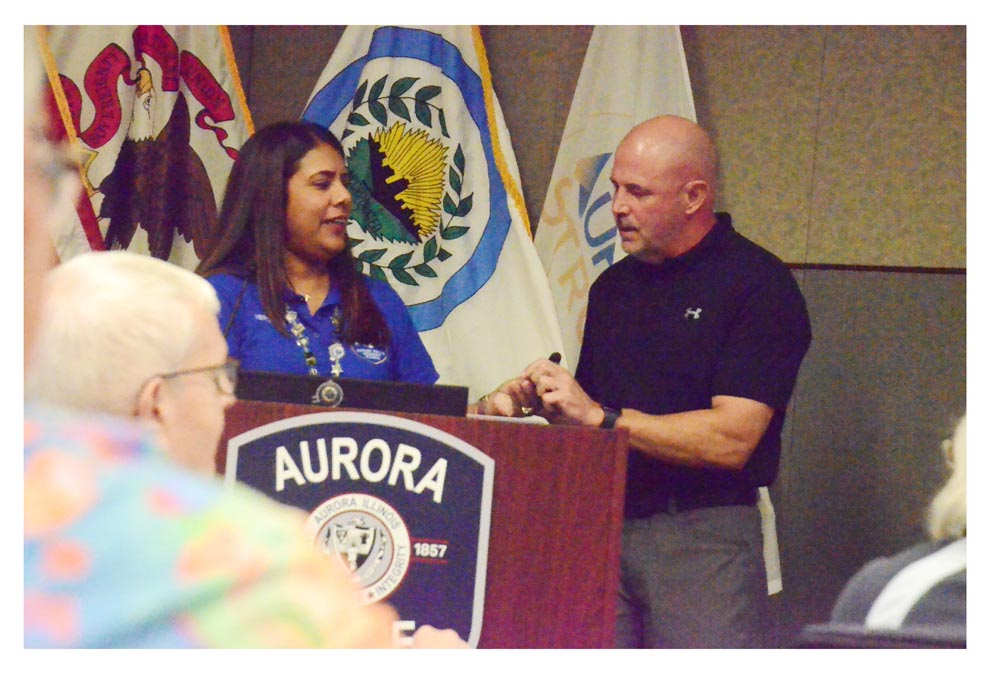
Greg Spayth, investigator for Kane County State’s Attorney Office human exploitation unit, discussed sex and labor trafficking in Kane. He was guest speaker at the Citizen Police Academy Alumni of Aurora monthly membership meeting at APD headquarters.
Spayth, a retired APD lieutenant with 30 years of experience in law enforcement, is part of a specialized team dedicated to investigating and prosecuting human trafficking offenses. The unit was established in response to rising incidents of human trafficking in Kane County and the need for enhanced training and investigative resources.
The investigator said, “After drug dealing, human trafficking is the second largest criminal industry in the world, and it is the fastest growing. You can only sell drugs or guns once, but you can sex over and over again every single day and make a lot of money. It is a multi-billion-dollar criminal industry that denies freedom to 24.9 million people around the world.”
He defined sex trafficking as “the recruitment, harboring, transporting, provision, obtaining, patronizing, or soliciting of a person for the purpose of a commercial sex act.”
According to Spayth, human trafficking can happen to anyone. He noted some individuals are more at risk than others. They include substance users, mentally ill, runaways or homeless youth, migrants, or children in the welfare system.
He said traffickers use force, fraud or coercion and deception to exploit victims. Tactics include violence, manipulation, grooming, false promises of well paying jobs and romantic relationships. Perpetrators include friends, coaches, parents or family members, intimate partners, business and farm owners, gang members and powerful corporate and government executives.
In labor trafficking, individuals are forced to perform labor services through force, threats and lies. Forms include debt bondage, forced labor, and involuntary child labor. “Many times, victims are not aware that they are victims.
“Victims fear harm to themselves or loved ones. They may be manipulated into believing that the authorities cannot be trusted. Fear, shame, immigration status, and language barriers can prevent victims from seeking help.”
“A common misconception,” Spayth said, “is that victims always want our help and want out. Actually, some decline our help or contact us months later.”
He listed resource providers for victims: Emmaus, 773-334-6063; Reclaim 13, 312-462-3306; Nomi’s House, 630-480-1697; Refuge for Women, 224-357-0078; and national human trafficking hotline, 888-373-7888.
After his presentation, Spayth took audience questions. He invited attendees with questions or concerns to contact him at 630-444-1193 or email at spaythgregory@kanecountyil.gov.
— Al Benson