

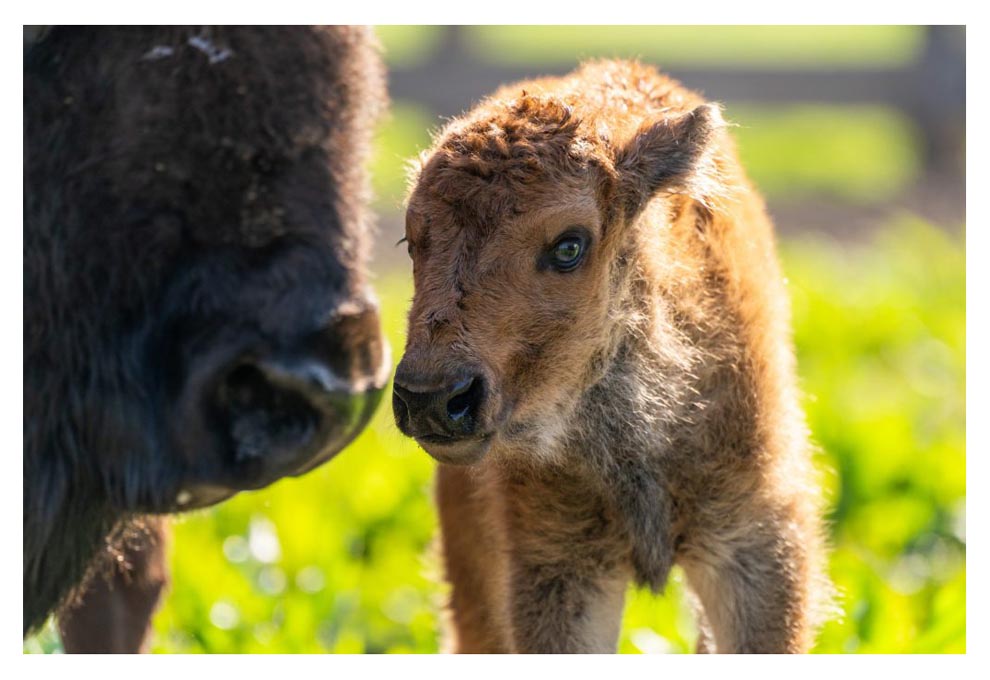
Spring has blossomed on the prairie land at Fermi National Accelerator Laboratory with one of the laboratory’s most cherished traditions: The arrival of the first newborn American bison calf. The first cinnamon-colored baby bison was born and is healthy, and the calf is staying close to its mother as it takes its first steps on the open grassland in Batavia.
Establishing and maintaining the bison herd at Fermilab is a bold symbol of the laboratory’s achievements on the frontiers of science. By establishing the herd of bison, the founder of Fermilab, Robert Wilson, intended to connect the laboratory with the Illinois prairie that once dominated the region. He believed that a cutting‑edge scientific facility should also honor the history and environment of the land it occupies.
“People come to Fermilab for world‑class science, but the bison herd has become one of the most beloved parts of our identity,” said Fermilab director Norbert Holtkamp. “Fermilab occupies a very special place with the local community and in the global scientific landscape.”
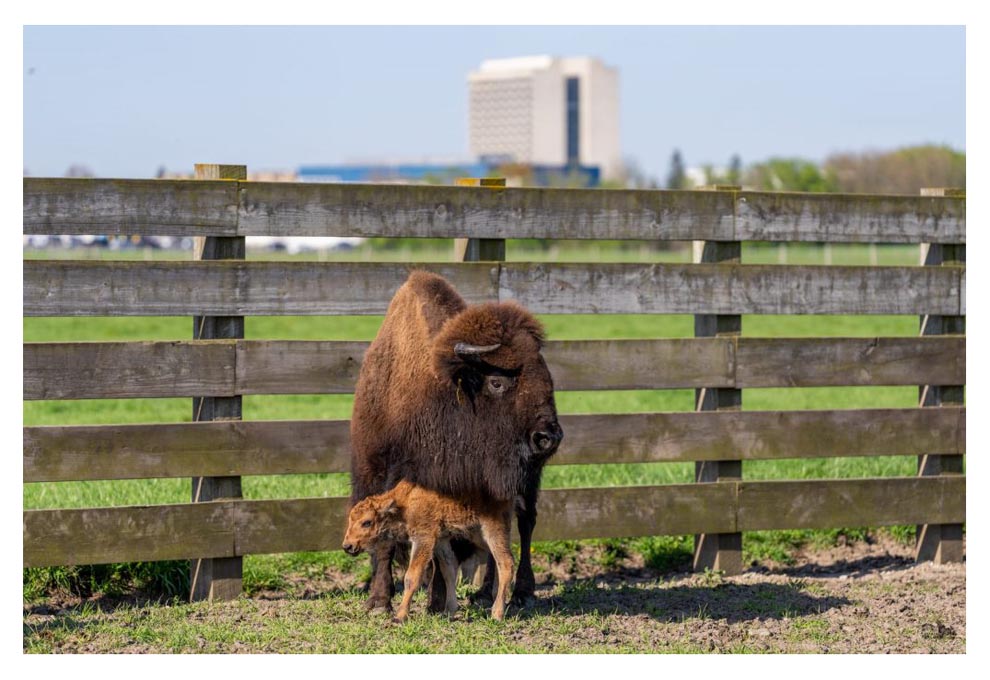
Bison are hardy animals that can live outside year-round in most any weather. The Fermilab herd is managed to live naturally on the prairie, with Fermilab keepers only providing them with structures within corrals to block the strong winds that swirl across Fermilab’s flat landscape.
The current herd consists of two bulls and 23 female cows. Bison calving season at the lab usually starts in the middle of April and continues until June. Each spring, the lab’s herdsman Cleo Garcia, expects approximately 20 new calves. Last year, 20 babies were born, with four calves arriving by surprise in late summer.
The public is welcome to view the herd anytime on the web 24-7 with the bison camera or by visiting Fermilab’s outdoor public areas from dawn to dusk every day of the week. Please visit the hours and public access webpage for information and requirements for visiting the lab, and celebrate the arrival of spring along with Fermilab’s newest additions.
—The Fermilab