
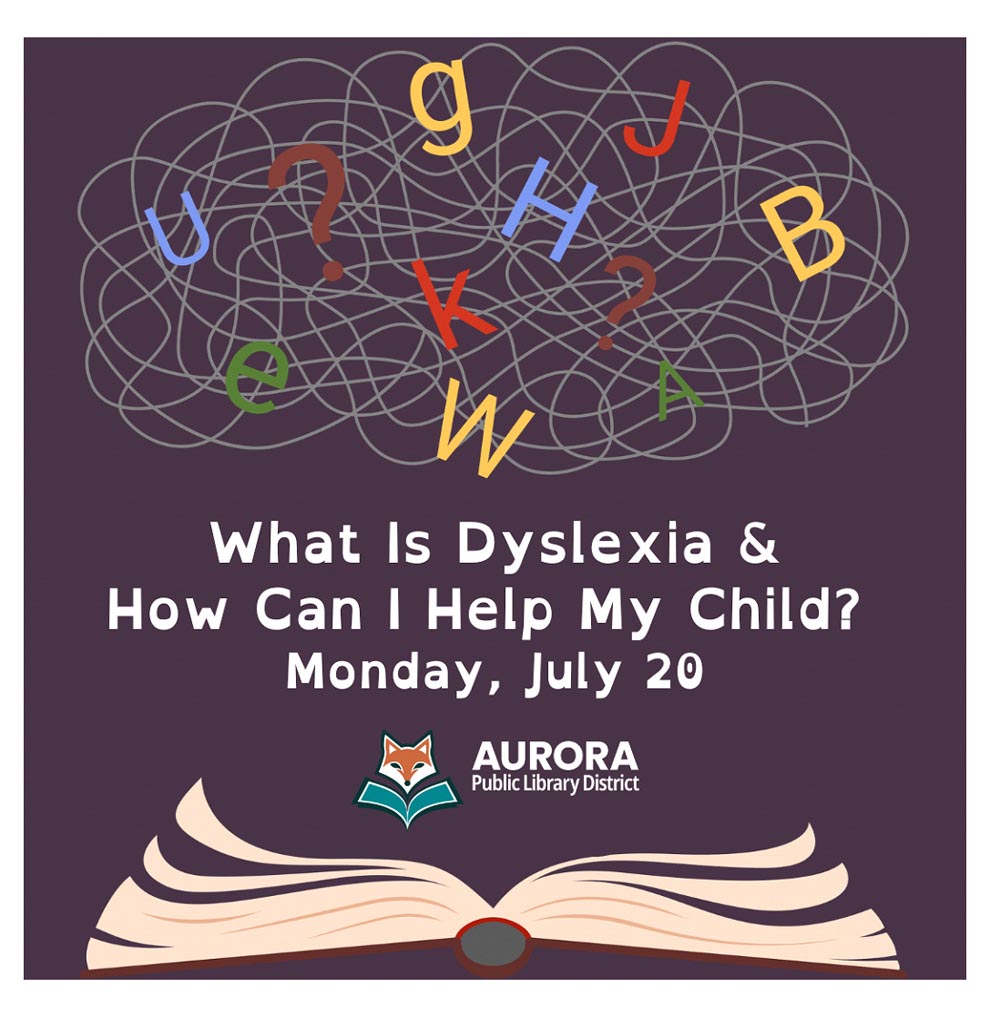
If your child struggles with reading, they’re not alone. Dyslexia affects about 15% (or 1.24 billion) of people worldwide, and experts estimate that many struggling readers go undiagnosed. The good news? Early intervention can make a huge difference in helping children build confidence and strengthen their reading skills. To help better understand dyslexia, the Aurora Public Library District is hosting What Is Dyslexia & How Can I Help My Child? in both English and Spanish Monday, July 20. Families will learn how dyslexia works and leave with practical ways to support the young readers in their life.
Dyslexia is a learning difference that affects reading, spelling, and language processing. It’s not related to intelligence levels, vision problems, or lack of motivation. Celebrities with dyslexia include Steven Spielberg, Salma Hayek, Octavia Spencer, and Anderson Cooper. It’s even speculated that Albert Einstein was dyslexic! Children (and adults) with dyslexia are just as capable as their peers. The difference is that they may need different tools and strategies to succeed.
Identifying dyslexia and learning those strategies sooner rather than later is the key. “It’s our role at APLD to give families the tools they need to increase reading abilities and create lifelong readers,” said Elementary School Services coordinator Mariana. “Our program presenter Paola Butler is a reading specialist with over 18 years of teaching experience who helps parents during their children’s reading process.” Parents, teachers, and caregivers of elementary-aged children will gain confidence in recognizing the signs of dyslexia and advocating for their children.
If dyslexia goes unaddressed, it can affect academic success and self-confidence well into adulthood. In addition to educational programs like this one, APLD offers a variety of ongoing resources to help. “We have several books about dyslexia and amazing databases like Libby to support reading skills,” added Mariana. Customers who use Libby for eBooks can choose to display the book using the OpenDyslexic font. This font has more space between letters and lines, and the letters themselves are bolder at the bottom so words appear clearer to the reader. Using this font helps minimize distractions to the reader’s brain, allowing them to focus on the information being read.
Reading is one of the most important building blocks for success in school and beyond. Whether your child has been diagnosed with dyslexia, is struggling with reading, or you simply want to learn more about supporting literacy at home, this program offers valuable insights from an experienced expert. Join us at Santori Library Monday, July 20 at 6 p.m. for the English presentation and 7:15 p.m. for the Spanish presentation. For more information, visit www.aurorapubliclibrary.org or call us at 630-264-4117.
Andrea Tiberi is the communications coordinator for the Aurora Public Library District.